

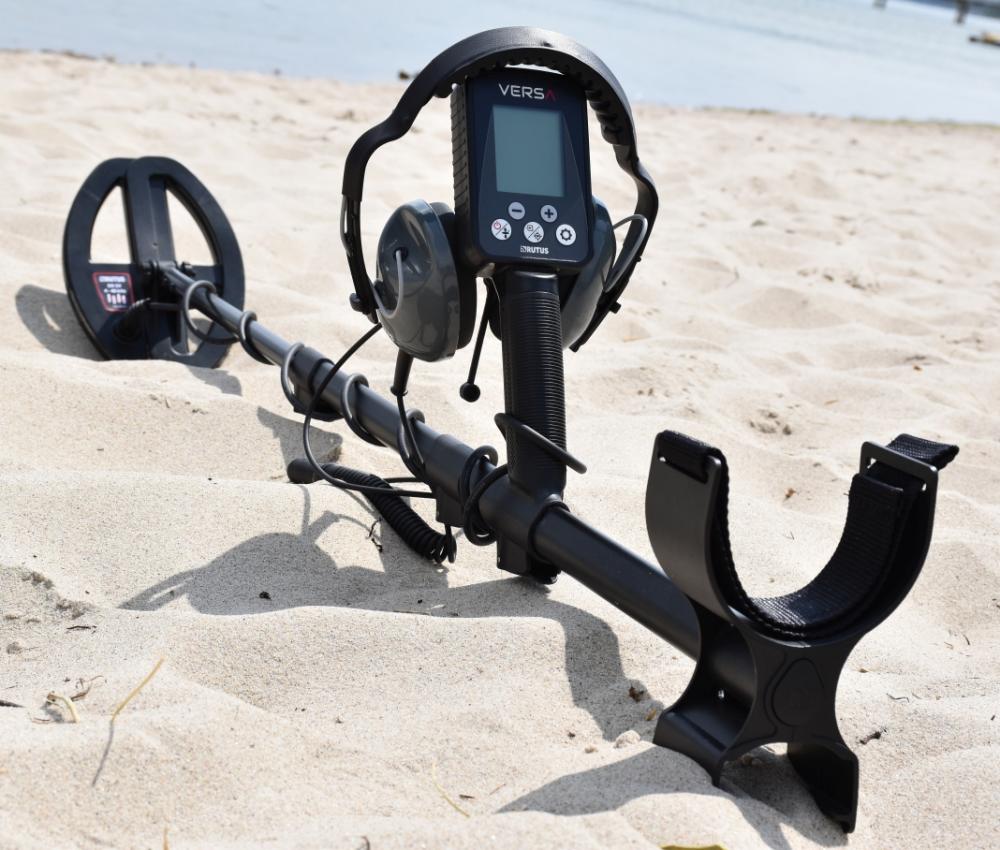
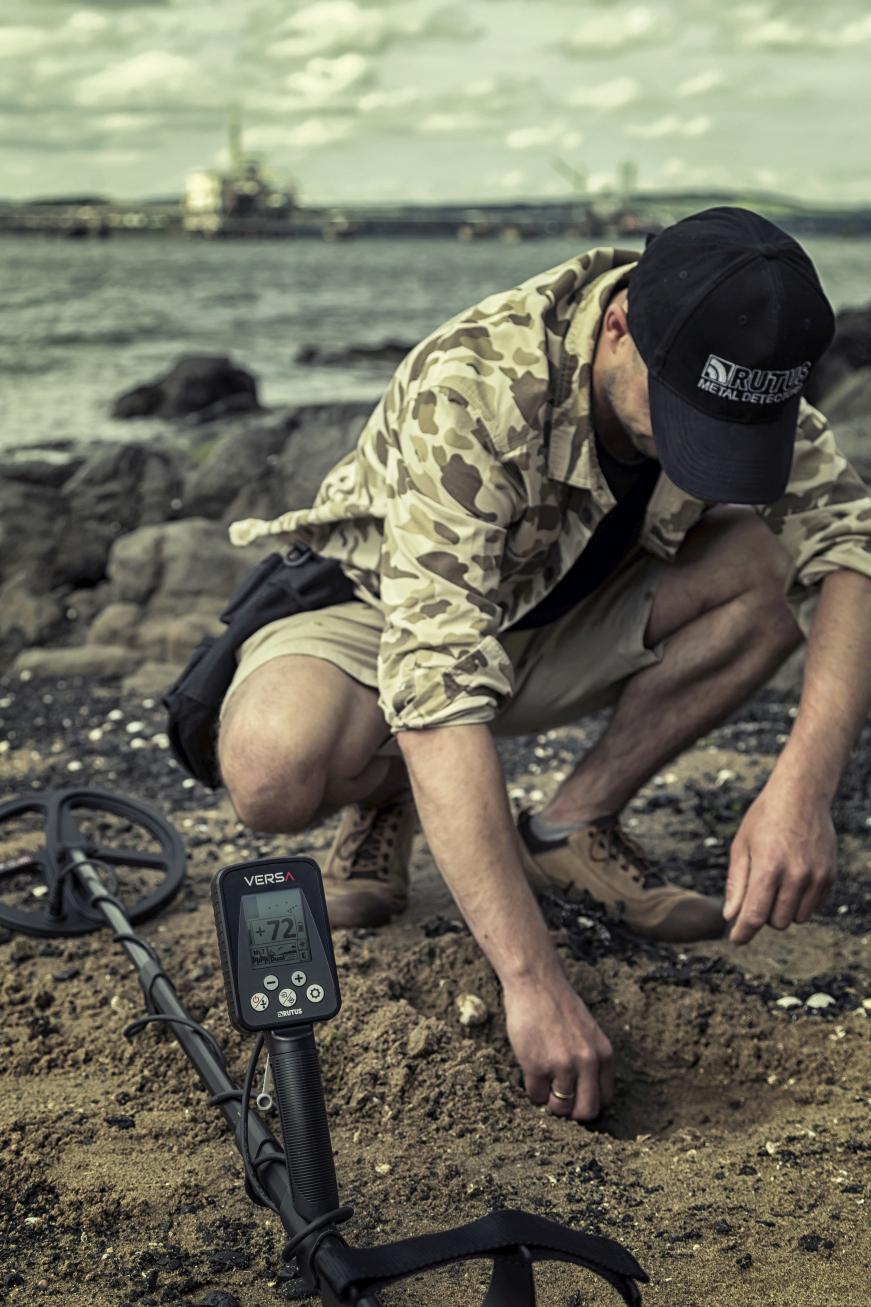
Rutus Versa Metal Detector
Tax included.
- Metal Detector for Professionals
- Multi-frequency metal detector
- Suitable for saltwater search
- Very good deep bass performance
- Waterproof up to 2.5 m
Shipping date is being calculated...
Ihre gesetzlichen Gewährleistungsrechte


Description
Rutus Versa – Waterproof Multi-Frequency Metal Detector for Tech-Savvy Detectorists
The Rutus Versa is a waterproof multi-frequency metal detector (4–40 kHz) with a built-in battery and compact telescopic shaft. It is aimed at detectorists who don't just want to "turn on and go," but enjoy fine-tuning settings, understanding signals better, and getting the most out of every search area – on the beach, in the field, in the park, and even in water.
Special Features at a Glance
- Multi-frequency 4 to 40 kHz with three different multi-frequency types
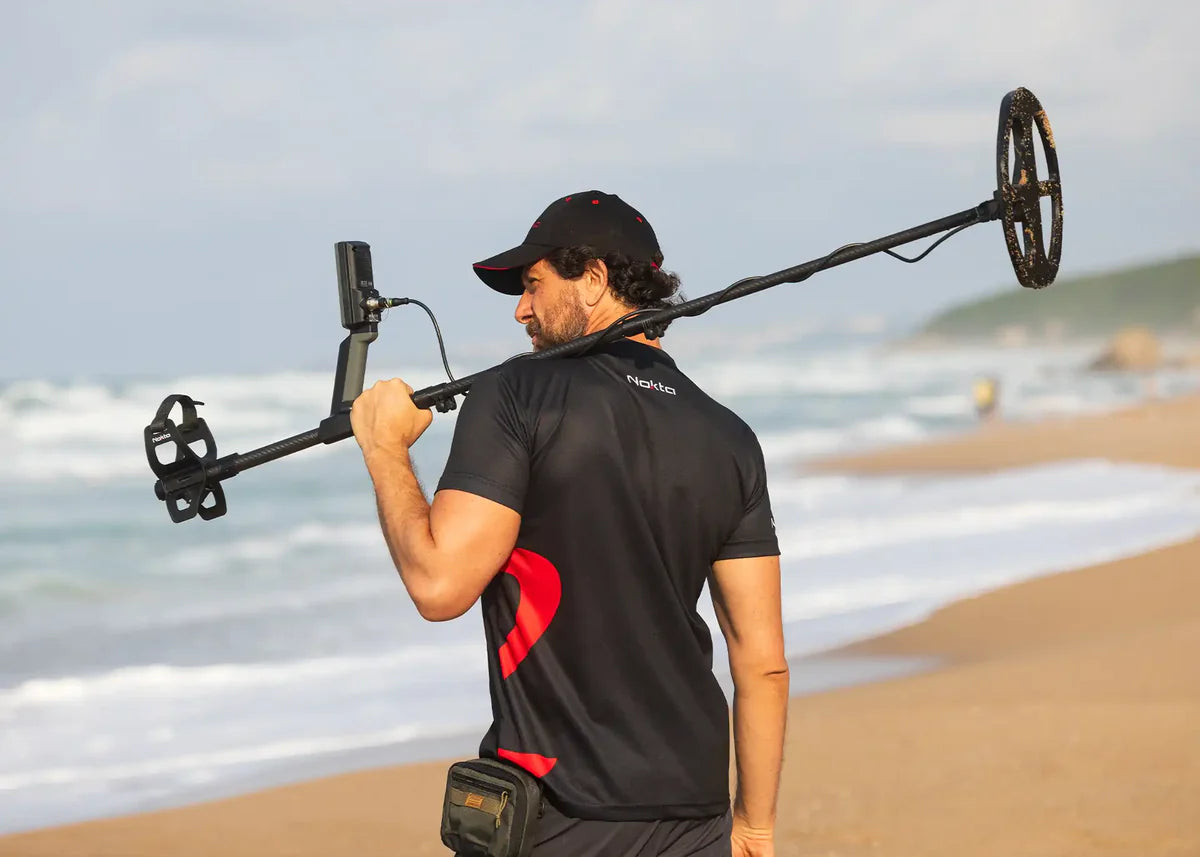
- Waterproof up to 2.5 m – ideal for shallow water and underwater searching
- 7 factory programs + 4 user programs for saving custom setups
- Non-Motion program with discrimination and tone ID for deep searching large objects
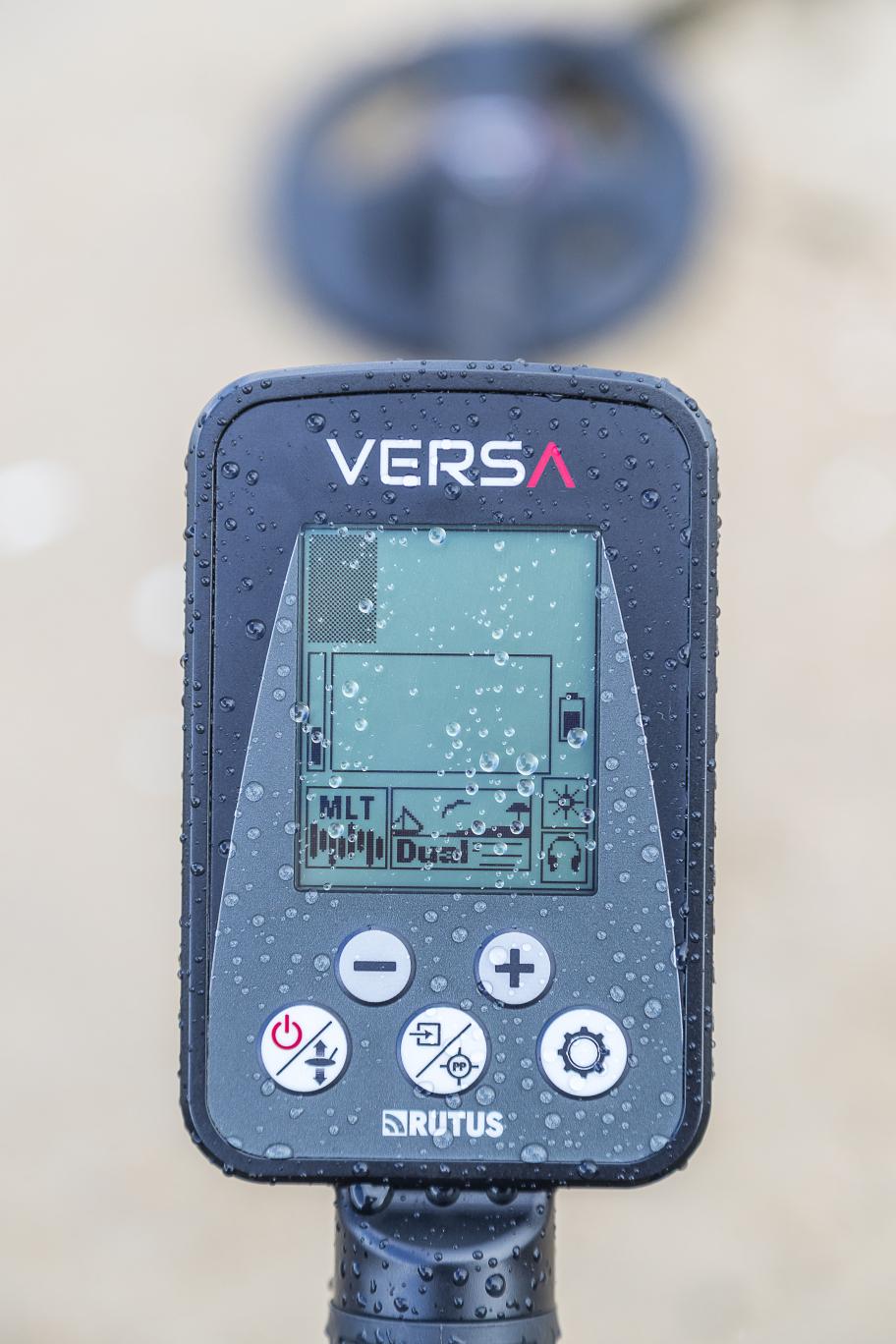
- ID-Graph for better distinguishing good signals from iron
- Advanced audio settings including individual audio panel
- Adjustable recovery speed for more control in iron
- Bottle cap and iron filter for cleaner signals in "trashy" areas
- Coin Boost for mineralized areas and iron-rich soils
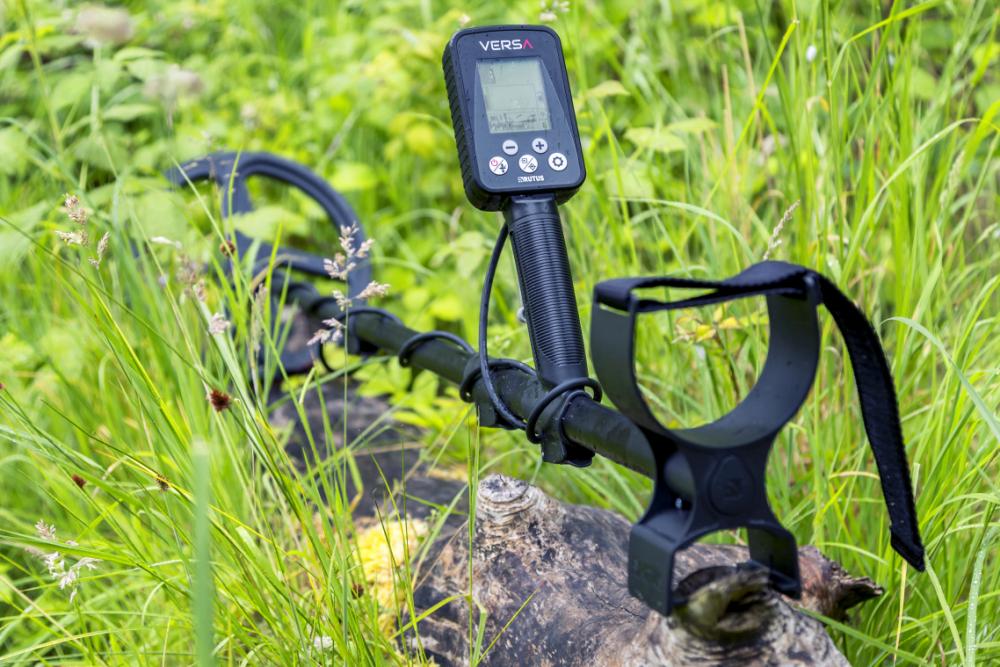
- Compact, telescopic design – quickly stowed, quickly ready for use
Multi-Frequency Modes (4–40 kHz): W, FL, and FH – Depending on Soil & Target
The Rutus Versa offers three multi-frequency types that operate in the same frequency range but process signals differently. This is precisely what makes the difference: you can specifically tailor the detector to the search location and target objects.
- W-Type (conductive soils / beach)
Ideal for wet, conductive soils. This mode reduces interference from saltwater and materials such as coke and slate, ensuring more stable object detection. Standard in the Beach program. - FL-Type (weakly conductive objects)
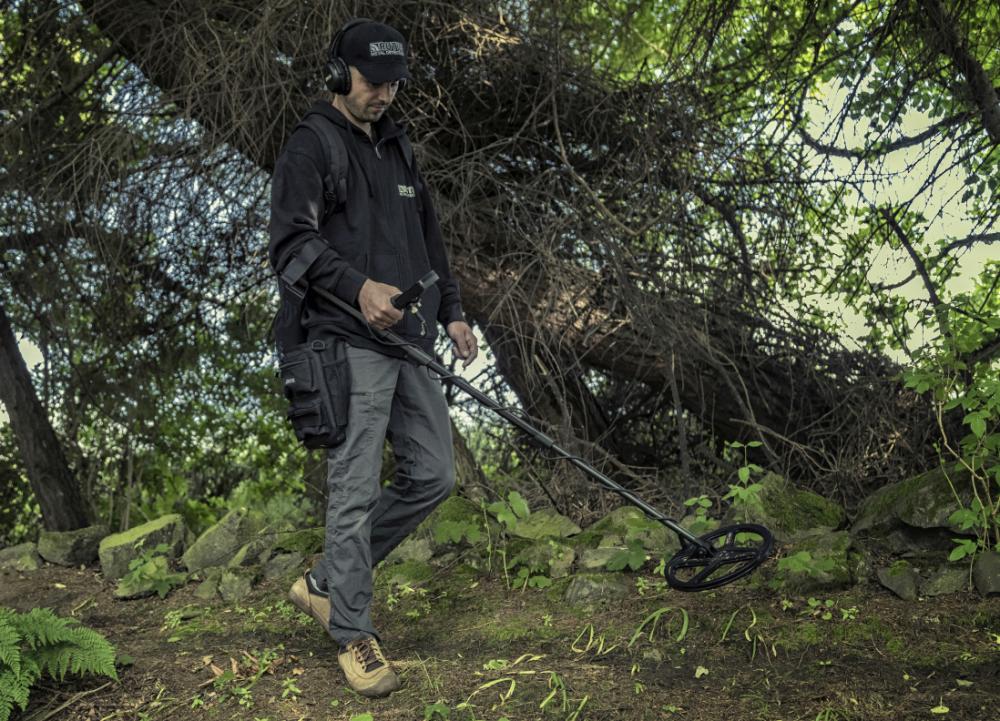
Designed for targets with low conductivity, e.g., small, thin silver coins. These signals often have ID values below 70 – perfect for precise fine searching. Standard in the Field and Park programs. - FH-Type (highly conductive objects)
Especially suitable for highly conductive, larger objects, e.g., large, thick silver thalers. Useful for IDs above 70 or when a very clear distinction is required.
Practical Rule:
For small coins and jewelry → Multi-frequency FL.
For wet, conductive soils (e.g., beach) → Multi-frequency W.
Single frequencies are possible if soil and environment permit. Note: The chosen frequency can also affect battery consumption. If you are unsure, simply start with multi-frequency FL.
Coin Boost: More Hits in Mineralization & Iron
Coin Boost is one of the most exciting features for difficult locations: it significantly improves coin detection on highly mineralized soils and in areas with a lot of iron, old ceramics, or bricks.
- In clean areas, you can set the value higher (up to 30) to get more out of it.
- If you are digging up too many round iron objects, reduce the setting.
- As a rule of thumb: do not work below 15.
ID-Graph & Audio Panel: Better Signal Reading, Fewer False Digs
With the ID-Graph, you get a graphical representation of the signal data that helps you detect iron faster:
- Straight-line graph: usually an object made of a single material
- Curved/scattered graph: often "mixed" signatures (e.g., can, thin steel sheet)
- Iron objects can become visible in the iron range
For the best interpretability, it is worthwhile to actively use the tone settings. The Versa offers programmable user tones and an extended audio panel so you can precisely adapt audio and behavior to your style.
Dual Programs: Motion + Non-Motion for More Depth
The standard Beach, Field, and Park programs are also available as dual modes: a combination of motion and all-metal / non-motion. The goal is to combine the advantages of both worlds: good material identification plus maximum detection depth – especially interesting when it comes to deeper, larger targets.
Additionally, you can freely save 4 user programs. There are plenty of setting options: discrimination, notch, recovery speed, threshold, iron volume, audio panel, and more.
Underwater Search up to 2.5 m: What to Consider
The Rutus Versa is Rutus's first waterproof metal detector and is waterproof up to 2.5 meters. For use in water, use the silicone cover (to protect the speaker from dirt/sand and possible water pressure).
Important for wireless headphones (brand-independent):
The wireless SR-1 are suitable for shallow water – as soon as the control unit is submerged, the radio connection may break. In addition, wireless headphones are generally not waterproof.
Specifications
Scope of delivery
Manufacturer
Documents
Rutus Versa – Waterproof Multi-Frequency Metal Detector for Tech-Savvy Detectorists
The Rutus Versa is a waterproof multi-frequency metal detector (4–40 kHz) with a built-in battery and compact telescopic shaft. It is aimed at detectorists who don't just want to "turn on and go," but enjoy fine-tuning settings, understanding signals better, and getting the most out of every search area – on the beach, in the field, in the park, and even in water.
Special Features at a Glance
- Multi-frequency 4 to 40 kHz with three different multi-frequency types
- Waterproof up to 2.5 m – ideal for shallow water and underwater searching
- 7 factory programs + 4 user programs for saving custom setups
- Non-Motion program with discrimination and tone ID for deep searching large objects
- ID-Graph for better distinguishing good signals from iron
- Advanced audio settings including individual audio panel
- Adjustable recovery speed for more control in iron
- Bottle cap and iron filter for cleaner signals in "trashy" areas
- Coin Boost for mineralized areas and iron-rich soils
- Compact, telescopic design – quickly stowed, quickly ready for use
Multi-Frequency Modes (4–40 kHz): W, FL, and FH – Depending on Soil & Target
The Rutus Versa offers three multi-frequency types that operate in the same frequency range but process signals differently. This is precisely what makes the difference: you can specifically tailor the detector to the search location and target objects.
- W-Type (conductive soils / beach)
Ideal for wet, conductive soils. This mode reduces interference from saltwater and materials such as coke and slate, ensuring more stable object detection. Standard in the Beach program. - FL-Type (weakly conductive objects)
Designed for targets with low conductivity, e.g., small, thin silver coins. These signals often have ID values below 70 – perfect for precise fine searching. Standard in the Field and Park programs. - FH-Type (highly conductive objects)
Especially suitable for highly conductive, larger objects, e.g., large, thick silver thalers. Useful for IDs above 70 or when a very clear distinction is required.
Practical Rule:
For small coins and jewelry → Multi-frequency FL.
For wet, conductive soils (e.g., beach) → Multi-frequency W.
Single frequencies are possible if soil and environment permit. Note: The chosen frequency can also affect battery consumption. If you are unsure, simply start with multi-frequency FL.
Coin Boost: More Hits in Mineralization & Iron
Coin Boost is one of the most exciting features for difficult locations: it significantly improves coin detection on highly mineralized soils and in areas with a lot of iron, old ceramics, or bricks.
- In clean areas, you can set the value higher (up to 30) to get more out of it.
- If you are digging up too many round iron objects, reduce the setting.
- As a rule of thumb: do not work below 15.
ID-Graph & Audio Panel: Better Signal Reading, Fewer False Digs
With the ID-Graph, you get a graphical representation of the signal data that helps you detect iron faster:
- Straight-line graph: usually an object made of a single material
- Curved/scattered graph: often "mixed" signatures (e.g., can, thin steel sheet)
- Iron objects can become visible in the iron range
For the best interpretability, it is worthwhile to actively use the tone settings. The Versa offers programmable user tones and an extended audio panel so you can precisely adapt audio and behavior to your style.
Dual Programs: Motion + Non-Motion for More Depth
The standard Beach, Field, and Park programs are also available as dual modes: a combination of motion and all-metal / non-motion. The goal is to combine the advantages of both worlds: good material identification plus maximum detection depth – especially interesting when it comes to deeper, larger targets.
Additionally, you can freely save 4 user programs. There are plenty of setting options: discrimination, notch, recovery speed, threshold, iron volume, audio panel, and more.
Underwater Search up to 2.5 m: What to Consider
The Rutus Versa is Rutus's first waterproof metal detector and is waterproof up to 2.5 meters. For use in water, use the silicone cover (to protect the speaker from dirt/sand and possible water pressure).
Important for wireless headphones (brand-independent):
The wireless SR-1 are suitable for shallow water – as soon as the control unit is submerged, the radio connection may break. In addition, wireless headphones are generally not waterproof.
Customer Reviews