


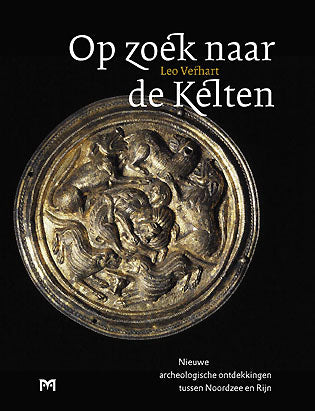
In Search of the Celts: New Archaeological Discoveries Between the North Sea and the Rhine
Tax included.
Device not in stock
Ihre gesetzlichen Gewährleistungsrechte


Description
Who were the Celts, how did they live, and did Celts actually live in our regions? These questions are central to "In Search of the Celts." In recent years, many new Celtic finds have been made: rich graves, valuable artifacts, coin hoards, and sanctuaries.
In this book, they are related to the center of Celtic culture in Central Europe. This book provides an overview of Celtic history in the Netherlands, Belgium, and the German Rhineland, based on archaeological excavations and discoveries. A scientific perspective mirrored against the romantic image we generally have of the Celts.
From 825 BC, the Celts are visible in the area around Hallstatt (Austria) and La Tène (Switzerland). During the Iron Age, their influence expands. In the regions between the North Sea and the Rhine, leaders begin to emulate the Celtic princes in Central Europe. They, too, are buried in extensive grave monuments with rich grave goods.
The world of princes, druids, and warrior heroes with their jewelry, sacrificed valuables, and weapons, as well as that of ordinary farmers and artisans, is discussed. Modern archaeological research and discoveries shed new light on their lives. They were not barbarians leading primitive lives far from the centers of world politics, but a community that was aware of what was happening in the world and followed the latest trends closely.
Nevertheless, Celtic culture disappeared with the arrival of the Romans. The Celts are not entirely extinct; today, they seem to be alive and well and form an important source of inspiration, especially for young people.
Leo Verhart is an archaeologist, works as a curator at the Rijksmuseum van Oudheden in Leiden, and is co-compiler of the exhibition "The Secret of the Celts." He is the author of several popular science books and also creates and presents television programs about archaeology.
- Verhart, L.
- Published in collaboration with: Limburgs Museum
- Print: July 2006
- 22 x 28 cm - 208 pages
- Sewn
Specifications
Scope of delivery
Manufacturer
Documents
Who were the Celts, how did they live, and did Celts actually live in our regions? These questions are central to "In Search of the Celts." In recent years, many new Celtic finds have been made: rich graves, valuable artifacts, coin hoards, and sanctuaries.
In this book, they are related to the center of Celtic culture in Central Europe. This book provides an overview of Celtic history in the Netherlands, Belgium, and the German Rhineland, based on archaeological excavations and discoveries. A scientific perspective mirrored against the romantic image we generally have of the Celts.
From 825 BC, the Celts are visible in the area around Hallstatt (Austria) and La Tène (Switzerland). During the Iron Age, their influence expands. In the regions between the North Sea and the Rhine, leaders begin to emulate the Celtic princes in Central Europe. They, too, are buried in extensive grave monuments with rich grave goods.
The world of princes, druids, and warrior heroes with their jewelry, sacrificed valuables, and weapons, as well as that of ordinary farmers and artisans, is discussed. Modern archaeological research and discoveries shed new light on their lives. They were not barbarians leading primitive lives far from the centers of world politics, but a community that was aware of what was happening in the world and followed the latest trends closely.
Nevertheless, Celtic culture disappeared with the arrival of the Romans. The Celts are not entirely extinct; today, they seem to be alive and well and form an important source of inspiration, especially for young people.
Leo Verhart is an archaeologist, works as a curator at the Rijksmuseum van Oudheden in Leiden, and is co-compiler of the exhibition "The Secret of the Celts." He is the author of several popular science books and also creates and presents television programs about archaeology.
- Verhart, L.
- Published in collaboration with: Limburgs Museum
- Print: July 2006
- 22 x 28 cm - 208 pages
- Sewn
Customer Reviews