


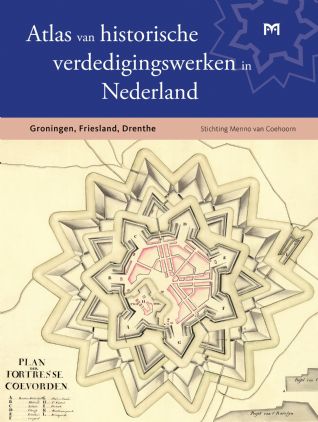
Atlas of historical defenses in the Netherlands. Groningen, Friesland, Drenthe
Tax included.
Shipping date is being calculated...
Ihre gesetzlichen Gewährleistungsrechte


Description
The provinces of Groningen, Friesland, and Drenthe each have their own unique development. Nevertheless, historically, they share many similarities. For example, in the Middle Ages, they managed to largely evade sovereign rule and enjoyed an independent status for a long time.
When they became part of the Dutch Republic in the sixteenth century, their interconnectedness became particularly visible in the military-geographical sphere. The focus of defense then shifted to the eastern outer border. The defensive capabilities of the raised bog were enhanced with fortresses and sconces, which were regularly renewed and expanded. At the same time, the fortifications in the more centrally located parts of the provinces largely lost their defensive significance.
Sixty years ago, the Menno van Coehoorn Foundation published a stapled publication based on an inventory of the defenses in the three provinces, which marked the beginning of the series of atlases of historical defenses in the Netherlands. In the 1990s, a significantly broader approach was chosen, which also paid attention to factors that had influenced the construction and improvement of defenses. After the publication of the volumes on the three southern provinces, it is now the turn of the north again.
This handbook covers not only the fortifications that still exist, but also those that have since disappeared. Anyone interested in fortification construction or wanting to know more about military history will find plenty to enjoy in this book.
- Kruijf, T. de et al.
- Print: May 2013
- 22 x 28 cm - 304 pp.
- Sewn bound
Specifications
Scope of delivery
Manufacturer
Documents
The provinces of Groningen, Friesland, and Drenthe each have their own unique development. Nevertheless, historically, they share many similarities. For example, in the Middle Ages, they managed to largely evade sovereign rule and enjoyed an independent status for a long time.
When they became part of the Dutch Republic in the sixteenth century, their interconnectedness became particularly visible in the military-geographical sphere. The focus of defense then shifted to the eastern outer border. The defensive capabilities of the raised bog were enhanced with fortresses and sconces, which were regularly renewed and expanded. At the same time, the fortifications in the more centrally located parts of the provinces largely lost their defensive significance.
Sixty years ago, the Menno van Coehoorn Foundation published a stapled publication based on an inventory of the defenses in the three provinces, which marked the beginning of the series of atlases of historical defenses in the Netherlands. In the 1990s, a significantly broader approach was chosen, which also paid attention to factors that had influenced the construction and improvement of defenses. After the publication of the volumes on the three southern provinces, it is now the turn of the north again.
This handbook covers not only the fortifications that still exist, but also those that have since disappeared. Anyone interested in fortification construction or wanting to know more about military history will find plenty to enjoy in this book.
- Kruijf, T. de et al.
- Print: May 2013
- 22 x 28 cm - 304 pp.
- Sewn bound
Customer Reviews